
Artificial Intelligence
The AI Market
Examining the business, investment, and financial significance of artificial intelligence.
Financial Growth
The AI market has expanded rapidly due to strong investment from governments, private firms, and venture capital. Businesses are adopting AI to reduce costs, improve efficiency, automate repetitive tasks, and generate new digital products and services.
Commercial Sectors
AI has become a major force in healthcare, finance, education, retail, transport, and cybersecurity. In healthcare, it supports diagnostics and predictive care. In finance, it helps with fraud detection, risk analysis, and algorithmic decision-making. In education, it enables personalisation and intelligent tutoring systems.
Why the Market Matters
The financial side of AI is important because it shows that AI is not just a research field but a major commercial industry. Companies now compete not only on software quality but also on access to data, chips, cloud capacity, talent, and trust.
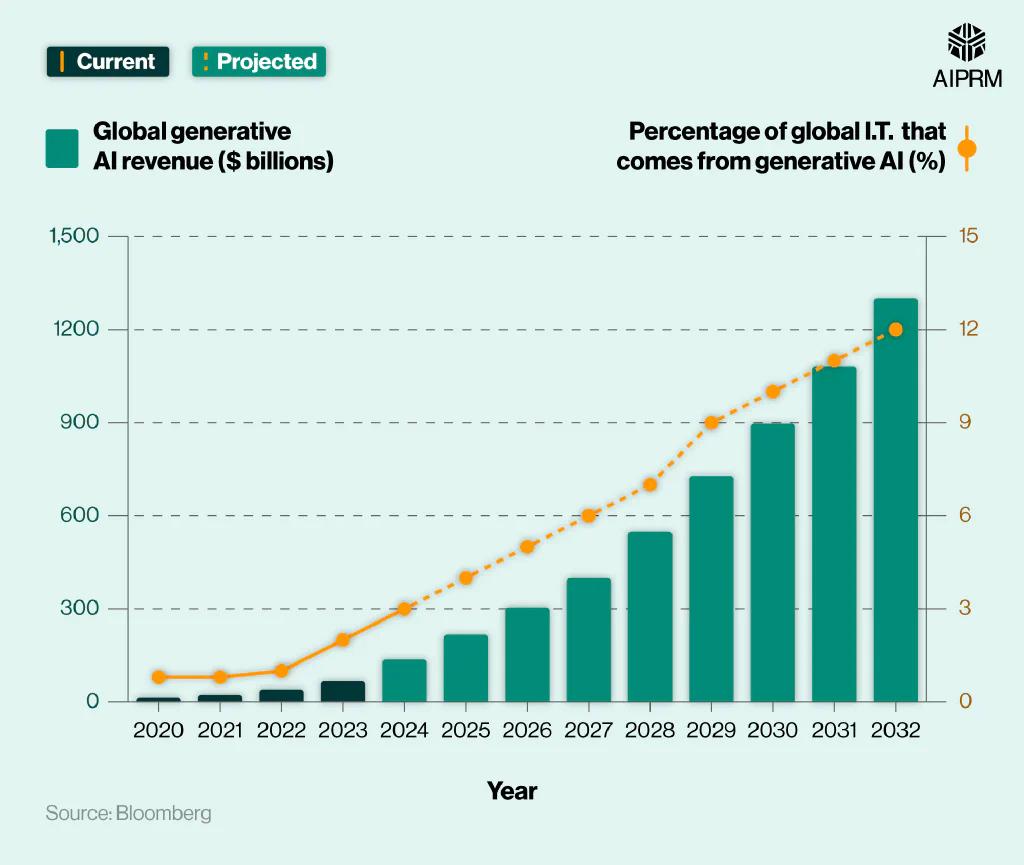
Market at a Glance
$200B+
Estimated global AI market value in 2024, up from under $100 billion just three years earlier.
~37% CAGR
The compound annual growth rate projected for AI investment through to 2030, making it one of the fastest-growing industries globally.
$1 Trillion+
The market size AI is projected to reach by 2030 according to several leading financial analysts and research firms.
Millions of Jobs
The World Economic Forum estimates AI will displace some roles while creating millions of new positions in data, engineering, and AI oversight.
AI Across Key Sectors
| Sector | How AI Is Used | Market Impact |
|---|---|---|
| Healthcare | Diagnostics, drug discovery, patient triage | Reduces costs and improves early detection rates |
| Finance | Fraud detection, algorithmic trading, credit scoring | Billions saved annually through automated risk management |
| Retail | Personalised recommendations, inventory, pricing | Drives significant revenue increases for major platforms |
| Transport | Route optimisation, autonomous vehicles, logistics | Lowers operational costs and reduces delivery times |
| Education | Adaptive learning, intelligent tutoring, grading tools | Expanding access to personalised education at scale |
| Cybersecurity | Threat detection, anomaly recognition, automated response | Critical as AI is also used to power new attacks |
Investment Landscape
Venture Capital
AI startups attracted record levels of venture funding in 2023 and 2024. Companies like Anthropic, Mistral, and Cohere raised billions in funding rounds as investors competed to back the next generation of foundation models.
Big Tech Spending
Microsoft, Google, Meta, and Amazon have committed tens of billions annually to AI infrastructure, model development, and cloud capacity — treating AI as a core competitive priority rather than a research project.
Government Investment
The United States, European Union, China, and United Kingdom have all launched national AI strategies with significant public funding, viewing AI capability as a matter of economic competitiveness and national security.
Hardware Markets
Demand for AI chips has transformed NVIDIA into one of the most valuable companies in history. The scramble for GPU supply has created shortages and driven chipmakers to accelerate next-generation hardware development.
Looking Ahead
The AI market is expected to continue growing across hardware, software, platforms, and services. Key battlegrounds will include multimodal AI, AI agents that can take actions autonomously, edge AI running on local devices, and AI embedded into every major business application. The companies that succeed will be those that combine model capability with trust, distribution, and integration into real workflows.